
Hart-en Vaatziekten
Voedingssupplementen zijn waardevol in de ondersteuning van hart- en bloedvataandoeningen.
Voeding en beweging blijven de belangrijkste maatregelen die moeten gewijzigd worden, supplementen kunnen een waardevolle ondersteuning zijn.
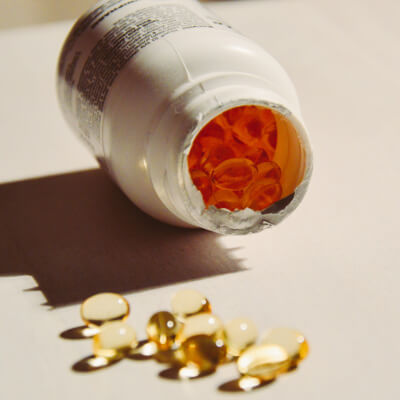
Volgende nutriënten kunnen ingezet worden ( dagdosissen):
-vit K2, 0.180 -0.360 mg
-vit D, 3000-5000 iu
-magnesium, 300-500 mg
-groene thee extract, 300-500 mg EGCG
-curcumine, 500 -1000 mg
-resveratrol, 100-200 mg
-omega-3, 1000-2000 mg EPA+DHA
-vit C, 1000 -2000 mg
-L-Taurine, 500-1500 mg
-Red Yeast Rice met 10 mg monacoline-K. Dit kan een alternatief zijn voor de klassieke statinen die voorgeschreven worden.
De 10 mg dosering ( therapeutische dosering) kan alleen op voorschrift bij de apotheek verkregen worden.
De lage doseringen die als voedingssupplement te verkrijgen zijn, zijn weinig werkzaam.
De meeste van deze risicofactoren heb je helemaal zelf in de hand en kun je voorkomen door een gezond dieet en voldoende lichaamsbeweging beweging.
Wat kun je preventief doen?


Chelatietherapie
EDTA-chelatietherapie is een zeer veilige, ontgiftende therapie waarbij via een infuus een synthetisch aminozuur (EDTA of ethyleendiamine-tetra-acetaat) wordt toegediend. Dit aminozuur heeft de eigenschap dat het zich graag bindt aan metalen en mineralen. Deze binding noemt men een chelaat. Vooral zware metalen (zoals lood, cadmium en kwik) hebben een sterke affiniteit met EDTA en vormen er sterke bindingen mee.
In de jaren veertig en vijftig van de vorige eeuw ontdekten artsen die hartpatiënten met een loodintoxicatie behandelden dat hun patiënten een sterke vermindering van hartklachten hadden.
Zelf pas ik in mijn praktijk al langer dan twintig jaar chelatietherapie toe. Het is een therapie zonder nevenwerkingen. Ik heb reeds duizenden infusen gegeven en ondervind dat de therapie bijzonder goed werkt bij verstoppingen van de bloedvaten in de benen en rond het hart.
De voorbije twintig jaar werd chelatietherapie door heel wat wetenschappers bestudeerd, waarbij de werking en gunstige effecten in kaart zijn gebracht. In 1993 verscheen een studie waarin werd aangetoond dat patiënten die een hartaanval hadden gehad en daarna chelatietherapie volgden, een sterk verminderd risico hadden op een nieuw infarct. Zeventig procent was na drie jaar klachtenvrij en hun levenskwaliteit was sterk verbeterd: ze konden beter trappen lopen, waren minder snel kortademig, kregen meer bloeddoorstroming naar de onderste ledematen, hadden minder pijn in de benen enzovoort.
Onderzoek in 2014 (dubbel blind, placebo gecontroleerd) heeft aangetoond dat EDTA chelatietherapie inderdaad werkzaam is.
Voornamelijk diabetespatiënten hebben er baat bij. Deze patiënten zijn erg onderhevig aan hart- en bloedvataandoeningen als gevolg
van hun ziekte. Bij diabetici zag men daling van 43 procent van mortaliteit, herval na operatie en heropname in het ziekenhuis voor hartproblemen. Andere patiënten hadden 18 procent vermindering in herval van hart-en bloedvatproblemen.
Chelatietherapie kan ook preventief worden toegepast, om aderverkalking te voorkomen. Het kan worden toegediend na een bypassoperatie om nieuwe hartaanvallen te voorkomen. In veel gevallen is chelatietherapie een veilig alternatief voor een hartoperatie en meestal is het een therapie die operaties aan de benen bij verstopte bloedvaten kan voorkomen. In veel gevallen kan chelatietherapie ervoor zorgen dat een amputatie of hartoperatie vermeden wordt.
In mijn ogen is chelatietherapie een zeer waardevolle aanvullende therapie, als onderdeel van een totaalbehandeling waarin ook gezonde voeding, lichaamsbeweging, vermindering van stress en voedingssupplementen van fundamenteel belang zijn. De therapie bewijst ook haar waarde als aanvulling bij klassieke geneesmiddelen.
Chelatietherapie beïnvloedt twee processen en werkt dus op twee manieren:
- EDTA neutraliseert vrije radicalen. Als vrije radicalen onder invloed van bepaalde omstandigheden (roken, stress, ongezonde voeding, luchtvervuiling, overmatig alcoholgebruik, sommige medicijnen) vrije baan krijgen, gaan ze cellen beschadigen, met als gevolg een versneld verouderingsproces, kanker en aderverkalking. De productie en activiteit van deze vrije radicalen kan in de hand worden gewerkt door zware metalen in de bloedstroom. Chelatietherapie zorgt ervoor dat deze zware metalen worden geëlimineerd.
- EDTA bindt niet alleen zware metalen, maar ook calcium. Hierdoor wordt de verhouding tussen calcium en magnesium gunstig beïnvloed. Dat heeft een gunstige invloed op het aderverkalkingsproces.
In de praktijk wordt de werkzame stof EDTA samen met een cocktail van vitaminen, mineralen en aminozuren toegediend via een infuus. De behandeling gebeurt één of twee keer per week en moet twintig tot vijftig keer herhaald worden, afhankelijk van de indicatie.
Publicaties:
|
1.
|
Chelation therapy to treat atherosclerosis, particularly in diabetes: is it time to reconsider? Lamas GA, Ergui I.
Expert Rev Cardiovasc Ther. 2016 Aug;14(8):927-38. doi: 10.1080/14779072.2016.1180977. Epub 2016 May 5.
|
|
2.
|
Ujueta F, Arenas IA, Escolar E, Diaz D, Boineau R, Mark DB, Golden P, Lindblad L, Kim H, Lee KL, Lamas GA.
J Diabetes Complications. 2019 Jul;33(7):490-494. doi: 10.1016/j.jdiacomp.2019.04.005. Epub 2019 Apr
|
|
3.
|
Lamas GA, Boineau R, Goertz C, Mark DB, Rosenberg Y, Stylianou M, Rozema T, Nahin RL, Terry Chappell L, Lindblad L, Lewis EF, Drisko J, Lee KL.
Am Heart J. 2014 Jul;168(1):37-44.e5. doi: 10.1016/j.ahj.2014.02.012. Epub 2014 Apr 2.
|
|
4.
|
Chelation therapy after the trial to assess chelation therapy: results of a unique trial. Avila MD, Escolar E, Lamas GA.
Curr Opin Cardiol. 2014 Sep;29(5):481-8. doi: 10.1097/HCO.0000000000000096.
|
|
5.
|
Heavy Metals, Cardiovascular Disease, and the Unexpected Benefits of Chelation Therapy. Lamas GA, Navas-Acien A, Mark DB, Lee KL.
J Am Coll Cardiol. 2016 May 24;67(20):2411-2418. doi: 10.1016/j.jacc.2016.02.066.
|